Not sure which motorhome sat nav is right for you?
Our side-by-side comparison table puts every current model together – screen size, campsite data, routing and price – so you can see the trade-offs at a glance and choose with confidence.
Choosing a campervan sat nav
A campervan sat nav has a slightly different job. In a VW California, a Transporter conversion or a Marco Polo you are usually under 3 m tall and under 3.5 t, so low bridges are less of a worry than in a coachbuilt. You still want routing that knows your height, and campsite and overnight-stop data on board.
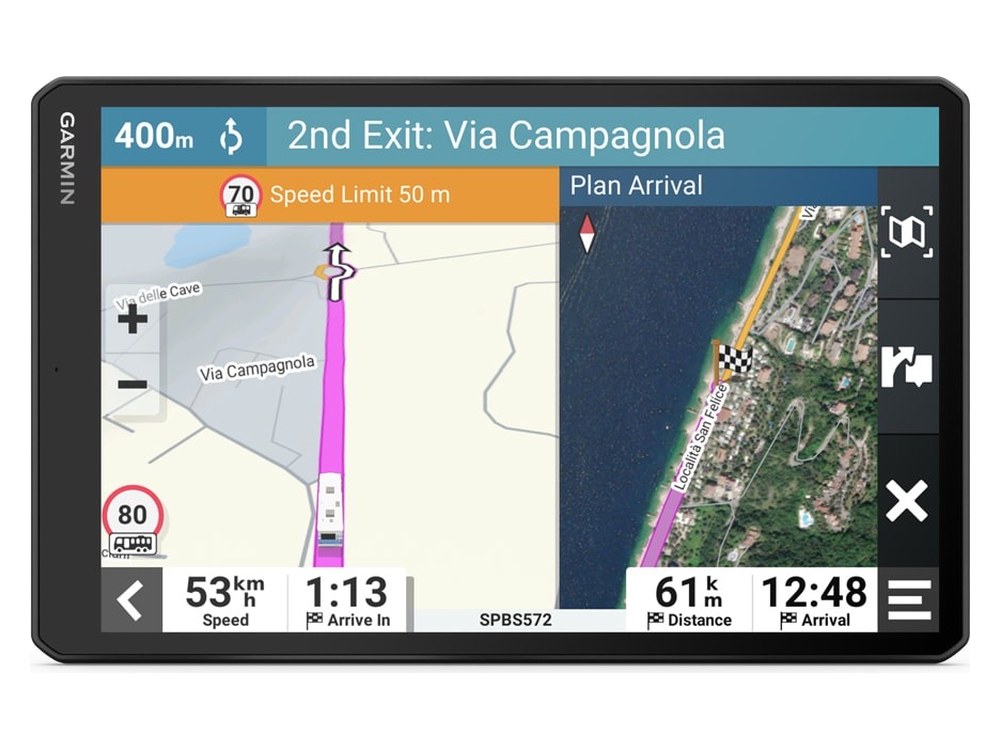
For most campervans our pick is the Garmin Camper 795. Its 7-inch screen is easy to read without taking over a car-sized dashboard, and it carries ACSI and CamperContact campsite data. If your van goes further than Europe, the TomTom GO Camper Max is the only model we tested with worldwide maps. Our best sat nav for campervans guide has the full van ranking, and says when a phone is enough.
Choosing a caravan sat nav
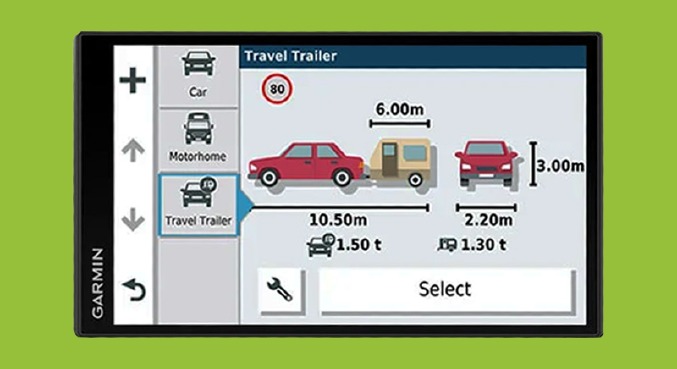
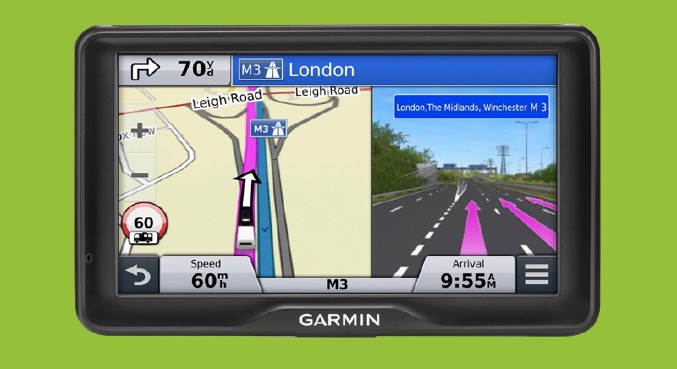
If you tow, the sat nav has to know the whole outfit: the caravan's height including the aerial, its width, the length from hitch to rear bumper, and the weight of car plus caravan. It also has to drop back to a car profile in one tap when you unhitch, and ideally show the towing speed limit, which in the UK is 60 mph on dual carriageways and motorways and 50 mph on single carriageways.
For towing our pick is the Garmin Camper 795: set up “car” and “car + caravan” once and switch between them, and its 7-inch screen sits on a car dashboard without blocking the view. If you mostly tour the UK and book Club sites, the Aguri RV760 has the Caravan and Motorhome Club and Camping and Caravanning Club sites built in. Our sat nav for towing a caravan guide covers setting up your outfit profile and the full towing speed limits.
What is a Caravan and Motorhome Sat nav?
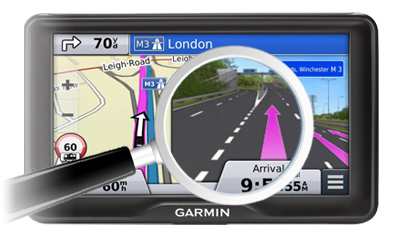
Sat nav is short for satellite navigation, and in the US the same device is usually called a GPS, so a motorhome GPS and a motorhome sat nav are one and the same. What sets a caravan or motorhome sat nav apart from the one in a car comes down to two things: routing that knows the size and weight of your vehicle, and campsite data built in.
Vehicle-aware routing
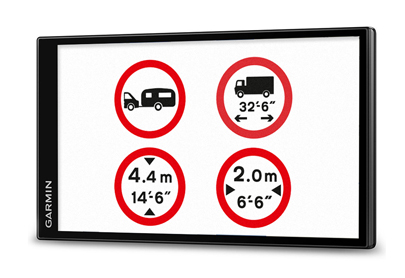
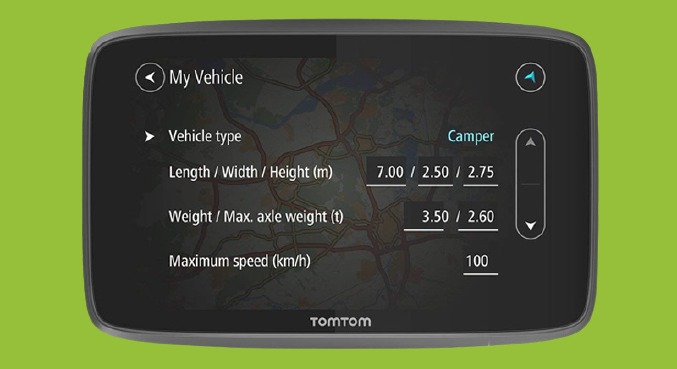
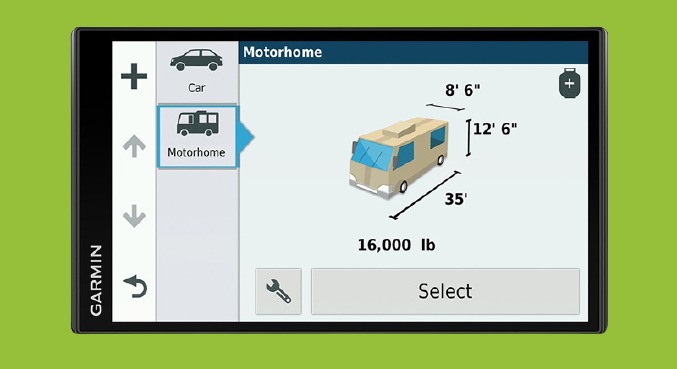
This is the whole point of a camper sat nav. When you first set it up, you enter your length, width, height and weight – and from then on it plans every route around those figures, steering you away from low bridges, weight-limited roads and lanes too narrow to pass. A standard car sat nav simply doesn't know your outfit is 3 metres tall and 3.5 tonnes, which is how caravanners end up wedged under a railway bridge.
Campsite & POI databases
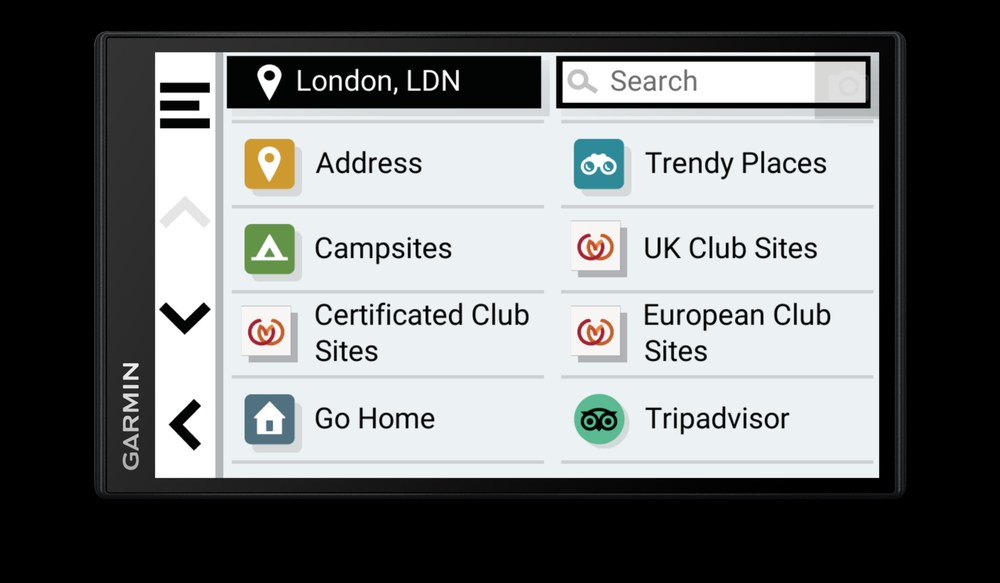
A good camper sat nav ships with thousands of campsites, aires and stopovers built in, so you can find somewhere to park up without a signal. Database quality is one of the biggest differences between models: the best integrate specialist directories such as ACSI, which inspects and rates over 8,500 European campsites a year. Points of interest typically cover:
- Campsites and caravan parks
- Aires, stopovers and overnight parking
- Motorhome services – fresh water, waste disposal, LPG
- Fuel, supermarkets and dump points sized for a large vehicle
- Landmarks and tourist attractions along the way
Which brands make the best motorhome and caravan sat navs?
Three names dominate. Garmin is the market leader and our current pick of the bunch – its Camper range pairs the best campsite data with the slickest, most reliable interface. TomTom is the polished, easy-to-live-with alternative. And Aguri, a British brand, covers the essentials with a strong UK campsite database. Snooper helped pioneer the category but its current Ventura models now trail the others, which is why they sit lower in our rankings.
Features worth paying for (and ones you can skip)
Hands-free calling
Bluetooth lets you take calls straight from the sat nav screen, so your phone stays in your pocket. It's standard on every Garmin Camper and most Snooper models – genuinely useful on a long drive.
Reversing & dash cameras
Most current models pair with an optional reversing camera – a real help when backing a large outfit onto a pitch – and several now bundle a dash cam too. Some, like the Aguri RV760, are also sold in dash cam or reversing camera bundles. Check each review's spec table for what's compatible.
Built-in TV and media
A nice-to-have rather than a must. If you genuinely want Freeview at your pitch, the Snooper Ventura S8110 has a digital TV tuner built in – but for most people a bigger, sharper navigation screen is the better use of your money.
How to choose a motorhome sat nav: our checklist
Whichever model you land on, make sure it ticks these boxes – they're the difference between a device you trust and one you fight with:
- Vehicle profiles – lets you enter your outfit's size and weight for tailored routing
- A 7-inch screen or larger – easy to read at a glance in a bright cab (go bigger for A-class cabs)
- Strong campsite data – look for specialist directories such as ACSI baked in
- Free lifetime map updates – ideally over built-in Wi-Fi, with no computer or subscription
- Live traffic – so you can route around jams before you hit them
Still weighing it up? Our side-by-side comparison lines up every current model, or start with our top pick, the Garmin Camper 795.
Sat nav app or dedicated device?
It is the first question most people ask, and the honest answer depends on how tall your outfit is and how far you go. Ordinary Google Maps and Waze have no idea what you are driving – to them you are a car, so they will happily send a 2.6 m outfit under a 2.4 m railway bridge or down a single-track lane with no passing places. Apps built for the job do exist: CoPilot and Sygic both offer caravan and motorhome profiles with dimension-aware routing, and they can be good.
What a dedicated device adds is everything around the routing:
- Offline maps that keep working with no signal – the moment you most need a route is usually the moment you have no bars
- Campsite and aire databases on the same screen as the route, rather than in a second app you have to switch to
- A bigger screen in a cradle, readable at a glance in a bright cab
- No phone battery and no roaming data burned on a long drive through France
- Nothing competing with your calls and music on the phone you are also using
So: if your van is under 2.5 m tall, you never tow, and you mostly drive routes you already know, a phone covers most of it and you can save the money – we say the same in our campervan guide. If you are taller than a car park barrier, if you tour abroad, or if you tow, a dedicated unit earns its keep on the three things that actually go wrong: an unfamiliar route, a foreign country, and finding a site with hook-up at 5pm on a Friday. Our towing guide works through the towing case in detail.
Does your base vehicle change which sat nav you need?
Not in the way people expect, and it is worth saying plainly because a lot of searches name a specific chassis. A Fiat Ducato coachbuilt, a Sprinter conversion and a twin-axle caravan all use the same devices: what a camper sat nav routes on is your measured height, width, length and weight, not the badge on the front. Enter those figures accurately – measure rather than trust the brochure, and include the aerial, roof lights and any air-conditioning pod in the height – and the devices we recommend here will all route around them.
What your vehicle really decides is screen size, so buy the size your dashboard can carry rather than the biggest number. A 7-inch Garmin Camper 795 suits most cabs; the 8-inch 895 and 10-inch 1095 run identical software and come into their own in a large A-class or coachbuilt; on a campervan dashboard a 10-inch screen is simply an obstruction.
If you are a Caravan and Motorhome Club member
One device is built specifically for you. The Avtex Tourer Three is made by Garmin under licence for Avtex and co-developed with the Caravan and Motorhome Club, and it preloads the Club's own database – Club sites, Certificated Sites and European Club sites – alongside ACSI, CamperContact and the Michelin Green Guide. That Club data is not available on a standard Garmin, TomTom or Aguri device. If you book Club sites it is the most convenient of the line-up; if you do not, the Garmin Camper 795 stays the more capable all-rounder. We rate it 4.2 / 5.
Caravan & Motorhome Sat Nav FAQs
Do I really need a special sat nav for a caravan or motorhome?
Yes, if you want to avoid trouble. A dedicated caravan or motorhome sat nav lets you enter your vehicle’s height, width, weight and length, then plans routes that avoid low bridges, weight limits and roads too narrow for your outfit — something a standard car sat nav or default phone maps won’t do. Towing with a car? See our guide to sat navs for towing a caravan.
What is the best caravan and motorhome sat nav in 2026?
Our current top pick for most people is the Garmin Camper 795, which balances a 7-inch screen, an excellent campsite POI database and free lifetime maps. If you want a bigger screen, the Garmin Camper 895 runs the same software on 8 inches, and TomTom’s GO Camper Max is the strongest non-Garmin alternative. See our comparison for the full picture.
Can I just use my phone instead of a dedicated sat nav?
You can, but ordinary Google Maps doesn’t route around your vehicle’s size and weight. Apps like CoPilot or Sygic offer caravan and motorhome profiles, but a dedicated device gives you a bigger screen, offline maps that keep working with no signal, and campsite databases built in — which is why many owners still prefer one.
Are the map updates free?
On every current model we recommend (Garmin Camper, TomTom GO Camper Max, Aguri RV760), map updates are free for the life of the device and download over built-in Wi-Fi — no computer or subscription needed.
How does a caravan sat nav avoid low bridges and narrow roads?
When you first set it up you enter your vehicle’s dimensions and weight, or save a profile. The sat nav then uses maps that include height, weight and width restrictions to plan only routes your outfit can legally and safely use, and warns you of hazards like steep hills or sharp bends.
What screen size should I choose?
Do these sat navs work across Europe?
Yes. All the current models come pre-loaded with full European mapping (the TomTom also includes worldwide maps), so they work for touring at home in the UK and on the continent, with the same free lifetime updates.